 Start here
Start Here
How the course works and how to use the calculator and quizzes.
Part of Molecular and Genomic Plant SciencePlant Breeding and GermplasmThe Complete Plant Science Library
The core molecular methods of a plant biotechnology laboratory, explained from the principle to the bench: DNA and RNA extraction, PCR, gel electrophoresis, restriction and cloning, sequencing, blotting and quantitative PCR. Free, with diagrams, worked calculations, quizzes, calculators and a verifiable certificate.
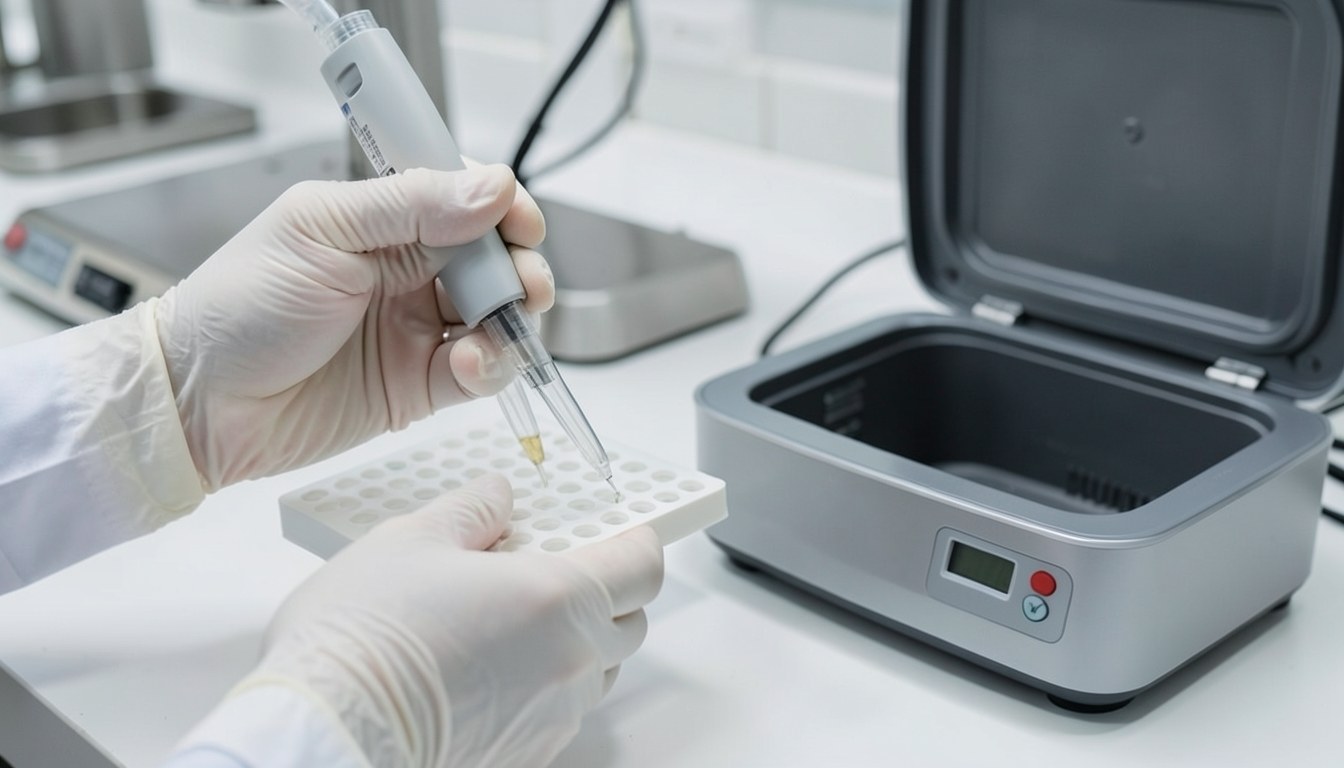
build reliable bench technique and a troubleshooting habit
understand the assays behind genotyping, transgene analysis and expression studies
connect lecture theory to what actually happens at the bench
know the principles behind GMO detection, pathogen diagnostics and seed testing
9 modules. Read each lesson, work the examples, then take the module quiz.
Start hereHow the course works and how to use the calculator and quizzes.
 Module 1
The central dogma, the anatomy of a gene, the properties of nucleic acids that every technique exploits, and the bench fundamentals of solutions, dilutions and controls.
 Module 2
Principles of nucleic acid isolation from plant tissue, a CTAB DNA protocol, RNA work, and how to judge quantity, purity and integrity.
Module 3How PCR works, how to design primers, how to optimise and troubleshoot a reaction, and the main variants used in plant biotechnology.
 Module 4
How agarose and polyacrylamide gels separate nucleic acids by size, how to run and read a gel, and how to fix common problems.
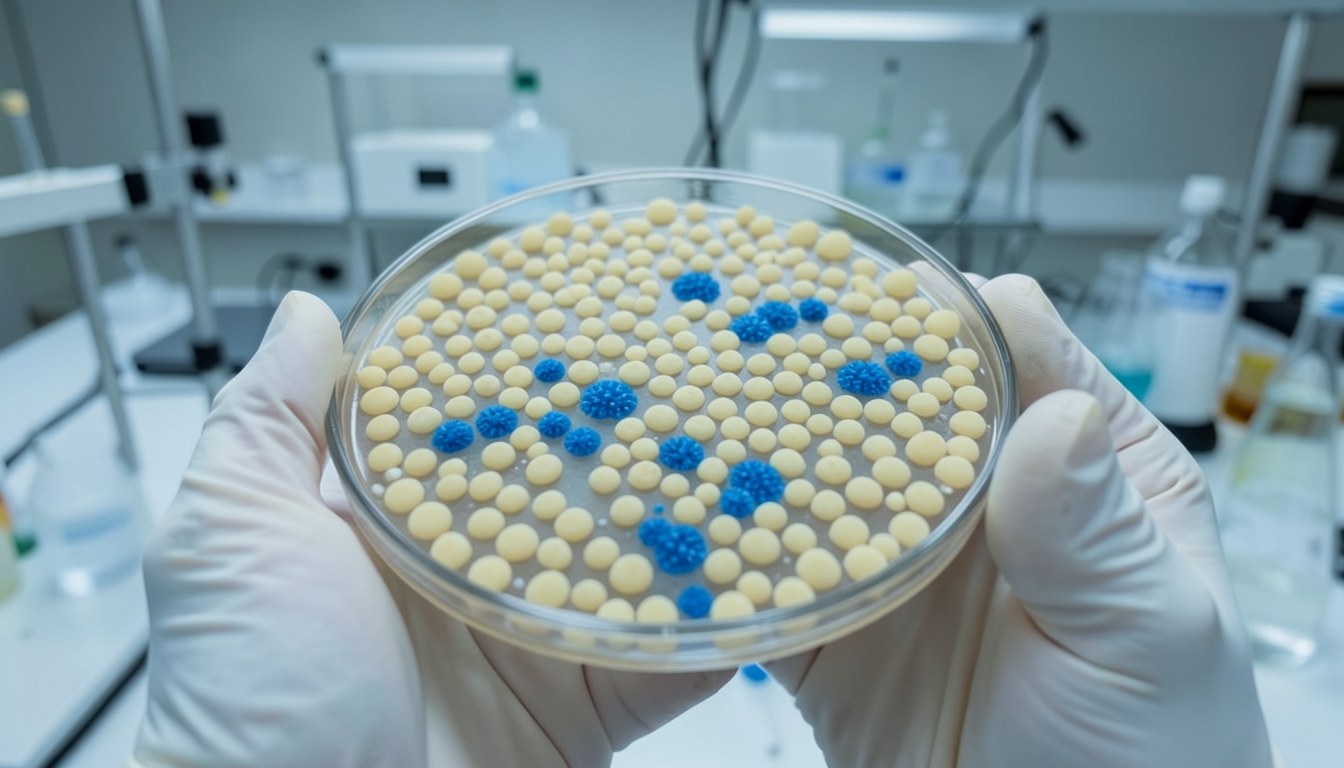 Module 5
Cutting and joining DNA: restriction enzymes, vectors, ligation, transformation and screening, plus the modern assembly methods.
 Module 6
Sanger sequencing, next-generation sequencing, quality scores, and turning reads into answers.
 Module 7
Southern, Northern and Western blots: what each detects, how the transfer and detection work, and where they are used in plant biotechnology.
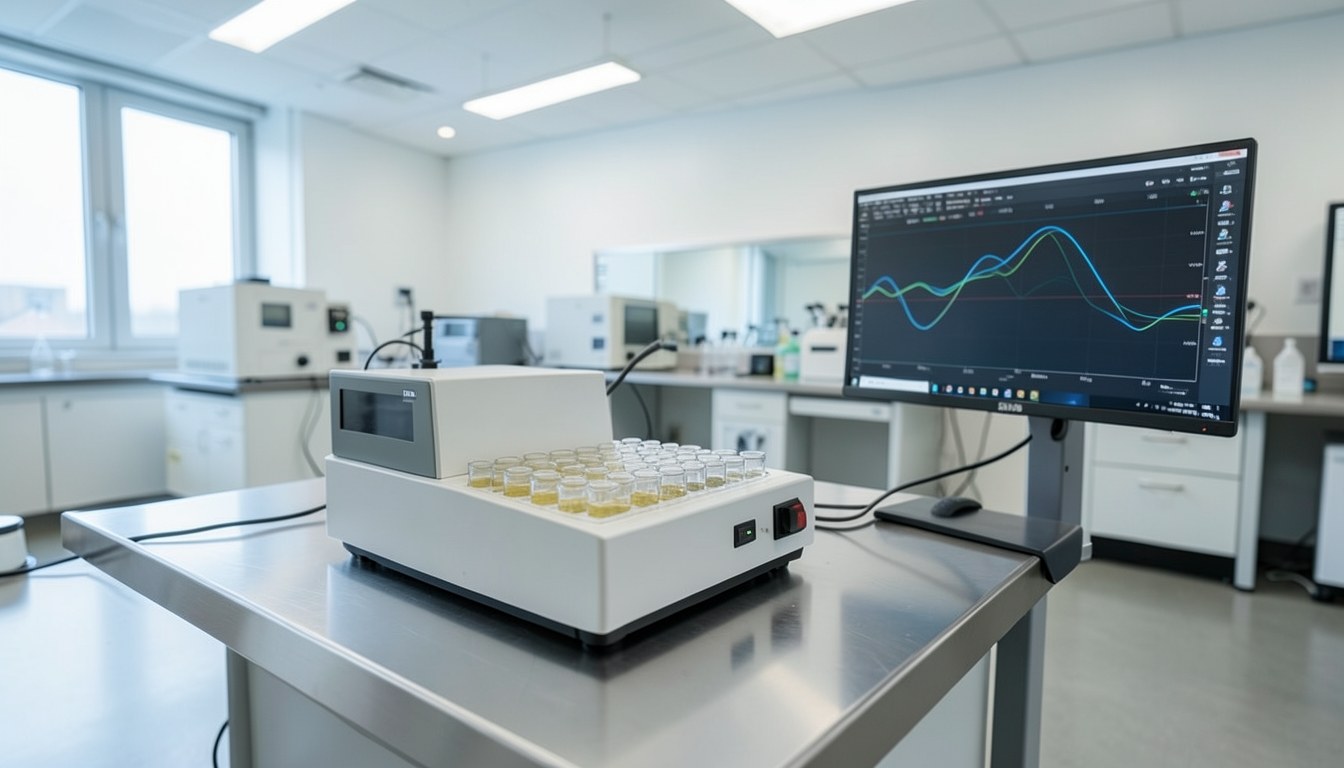 Module 8
Real-time PCR chemistry, quantification by the standard-curve and ΔΔCt methods, and the design practices that make qPCR data reliable.
 Module 9
A summary of the course and a comprehensive quiz.
Molecular calculator: primer Tm and GC%, reverse complement, DNA/RNA concentration, ligation ratios, qPCR efficiency and ΔΔCt
28 diagrams: central dogma, PCR, gels, cloning, sequencing, blotting and qPCR, all drawn for this course
Worked examples with the arithmetic shown, for dilutions, Tm, ligation, coverage and fold change
Troubleshooting tables for extraction, PCR, gels and qPCR
Quizzes with an explanation for every answer, and a comprehensive final assessment
A verifiable certificate of completion with a public ID
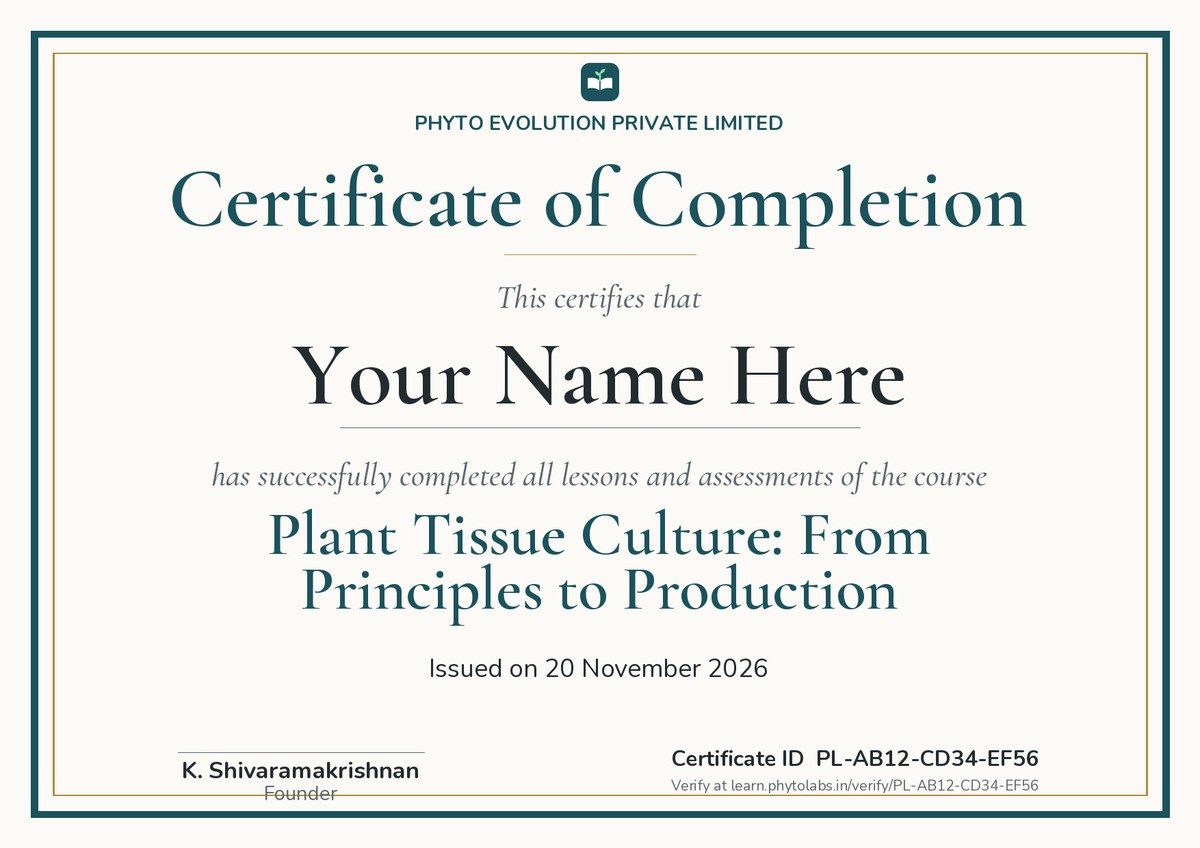
Complete every lesson and pass every quiz in Molecular Biology Techniques: From Nucleic Acids to Gene Expression. Your certificate has a unique ID and a public verification page.
Start learning freeNo. Each technique is explained from the principle upward. Some background in school-level biology and chemistry helps, and every calculation is worked through step by step.
Yes: lessons, quizzes, calculators and the certificate are free. A free account saves progress, marks quizzes and issues the certificate.
It gives typical, widely used conditions as starting points and explains why each component matters. Always follow your own laboratory's validated SOPs, safety rules and supplier instructions, and validate protocols on your material.
Read in order, work the examples, use the calculator, and take each module quiz. Estimated study time is shown on the course page.
Each certificate has a unique ID and a public verification page on this site.
No. It builds the understanding behind the bench work. Practise under supervision in a working laboratory.
Free, self-paced, with quizzes, calculators and a certificate.