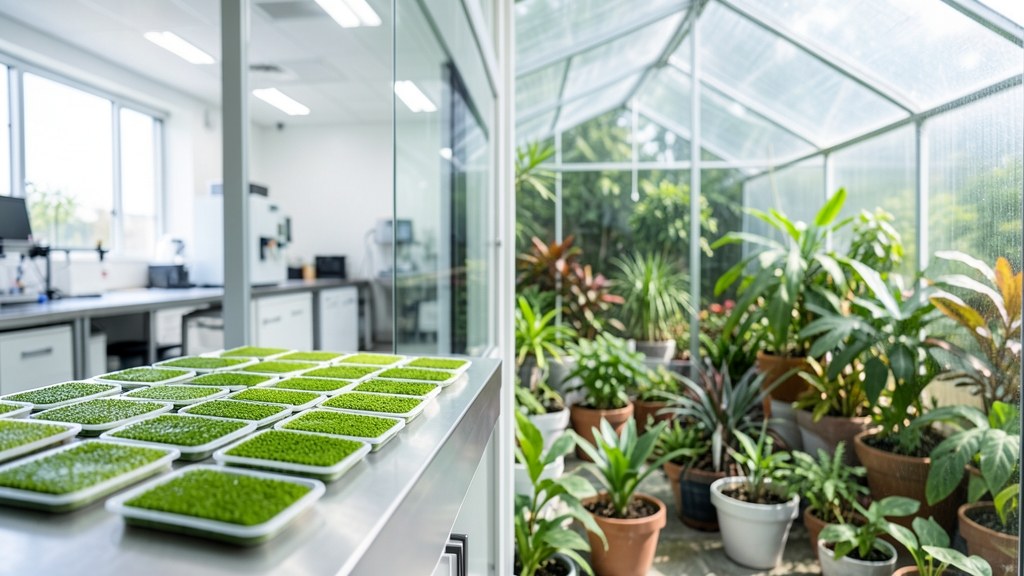
 Start here
Start Here
How the course works, what it assumes and how to use the tools.
Part of Molecular and Genomic Plant ScienceThe Complete Plant Science Library
How plants are genetically engineered and improved: Agrobacterium and biolistic transformation, regeneration systems, molecular markers and breeding, metabolic engineering, transgene design and biosafety, CRISPR genome editing, molecular farming and bioinformatics. Free, with diagrams, worked examples, quizzes, calculators and a verifiable certificate.
connect each technology to what it can and cannot deliver
understand the logic behind transformation, editing and expression experiments
understand what is being assessed and why
9 modules. Read each lesson, work the examples, then take the module quiz.
Start hereHow the course works, what it assumes and how to use the tools.
 Module 1
How DNA is delivered into plant cells: Agrobacterium and T-DNA, binary vectors, selectable markers and reporters, biolistics and other direct methods, and the workflow from explant to confirmed transgenic plant.
 Module 2
Choosing a plant system, transient and rapid systems such as agroinfiltration, hairy roots and floral dip, and ways to overcome genotype dependence.
 Module 3
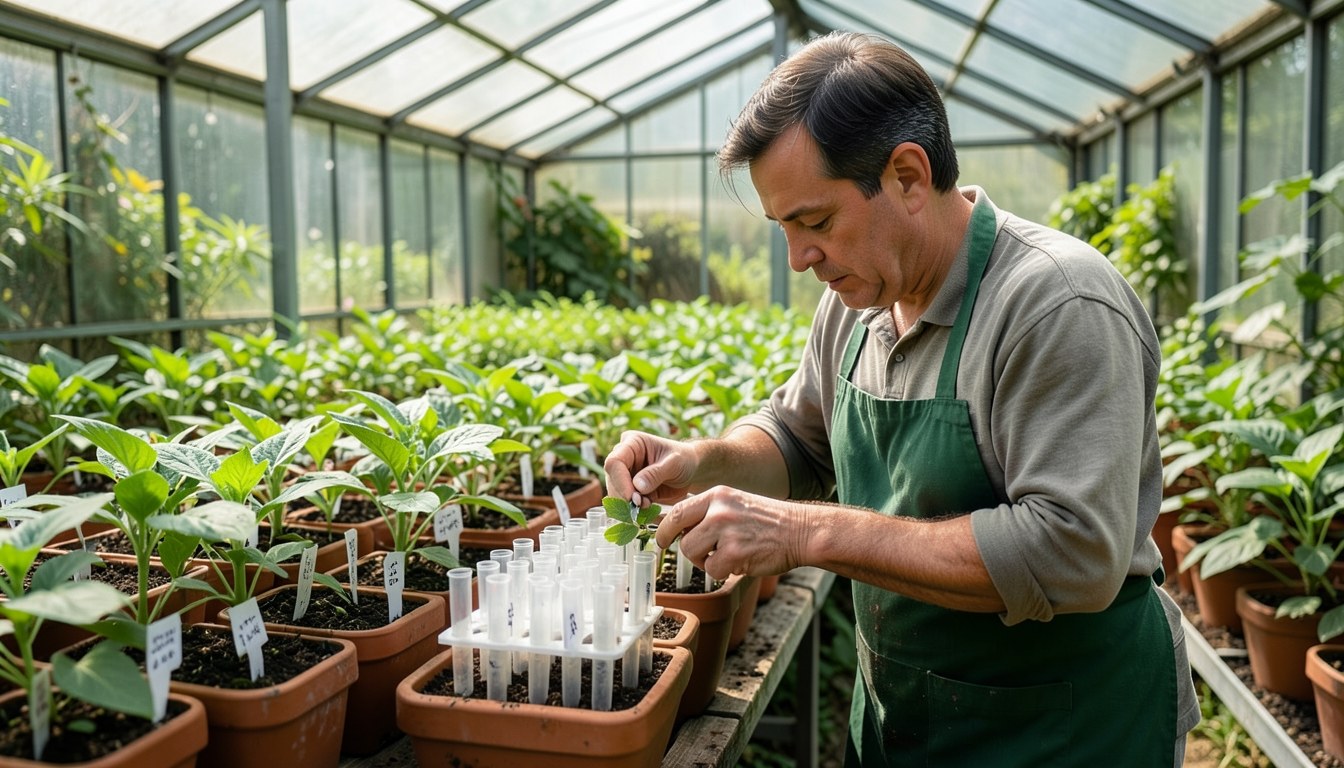
Types of molecular marker, mapping and QTL, marker-assisted selection and backcrossing, and genomic selection.
 Module 4
How plant pathways are re-wired to make new or more of a compound: levers, the Golden Rice case study, other examples and the limits.
 Module 5
Designing an expression cassette, characterising transgenic events, and the principles of biosafety regulation and risk assessment.
 Module 6
How Cas9 works, how to design guides and constructs, what happens after the cut, how edits are delivered without leaving foreign DNA, and how edited plants are regulated.
Module 7Using plants to make proteins, vaccines and other products: platforms, products and case studies, purification, glycosylation and economics.
 Module 8
Sequence databases and BLAST, the tools biotechnologists use daily, and how an RNA-seq experiment is analysed and interpreted.
 Module 9
A summary of the course and a comprehensive quiz.
Molecular calculator: primer Tm, qPCR efficiency and ΔΔCt, plus segregation χ² and backcross recovery
20 diagrams: T-DNA transfer, vectors, biolistics, workflows, kill curve, marker-assisted selection, Cas9, repair outcomes, molecular farming and RNA-seq
Worked examples: kill-curve dose, backcross recovery, χ² segregation test, guide design and fold change
Case studies: Golden Rice, non-browning apple, purple tomato, plant-made medicines
Quizzes with an explanation for every answer, and a comprehensive final assessment
A verifiable certificate of completion with a public ID
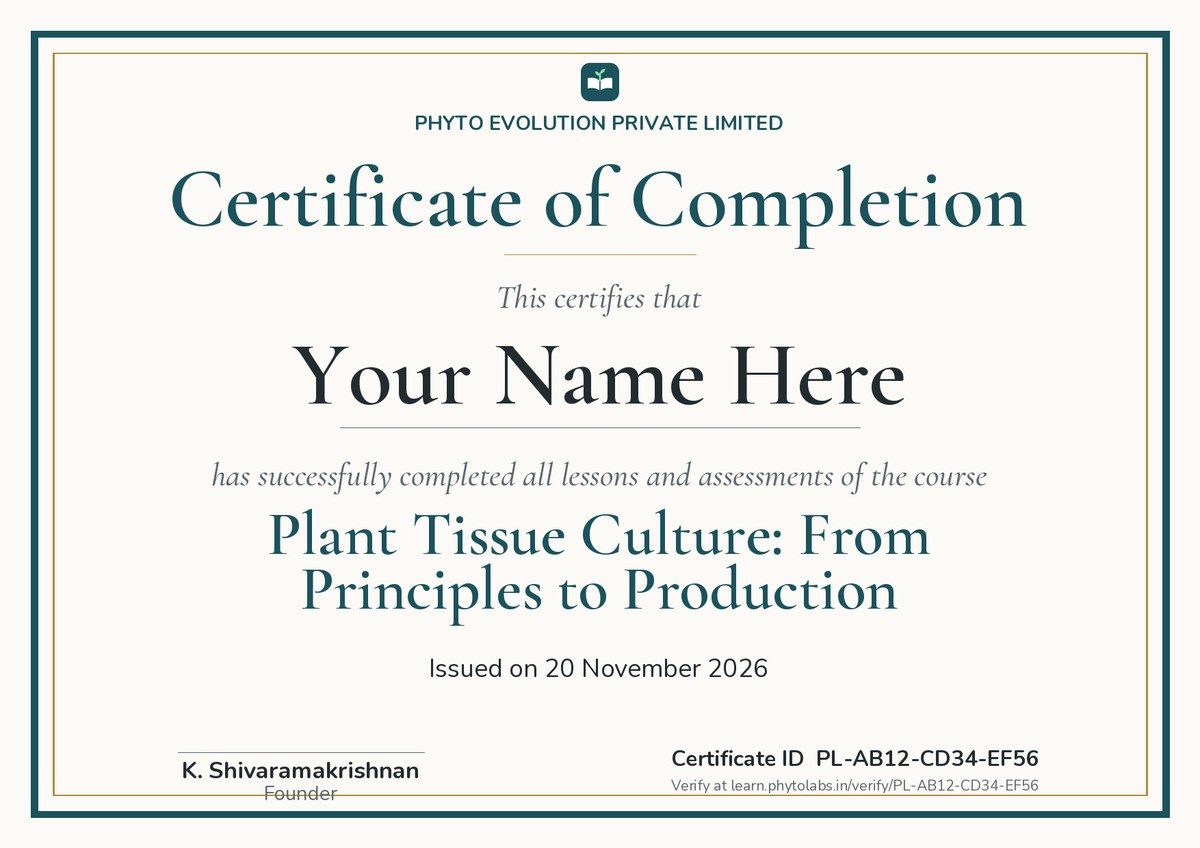
Complete every lesson and pass every quiz in Plant Biotechnology: Transformation, Genome Editing and Applications. Your certificate has a unique ID and a public verification page.
Start learning freeBasic molecular biology (DNA, genes, PCR). If you are new to the bench techniques, take MOL-201 (Molecular Biology Techniques) first or alongside this course.
Yes: lessons, quizzes, calculators and the certificate are free. A free account saves progress, marks quizzes and issues the certificate.
Yes, at the level of principles and typical stages. Regulations differ by country and change often, so the course explains the logic and tells you to check the current rules for any real project.
It teaches the science, the design choices and the workflow. Actual work needs a licensed, approved laboratory, biosafety committee approval and hands-on training.
Each certificate has a unique ID and a public verification page on this site.
The fundamentals are stable, but genome editing, regulation and products move quickly. Treat named examples as illustrations and check current sources.
Free, self-paced, with quizzes, calculators and a certificate.