Start here
Start Here
How the course works, what Integrated Pest Management is for, and how the calculations are used.
Part of Plant Health and BiosecurityThe Complete Plant Science Library
How to manage plant pests as one decision system: pest biology and population growth, degree-days, scouting and sampling plans, economic injury levels and action thresholds, cultural, physical and biological control, modes of action and resistance genetics, pesticide safety, calibration and drift, and the evaluation of whole programmes, with every calculation worked through.
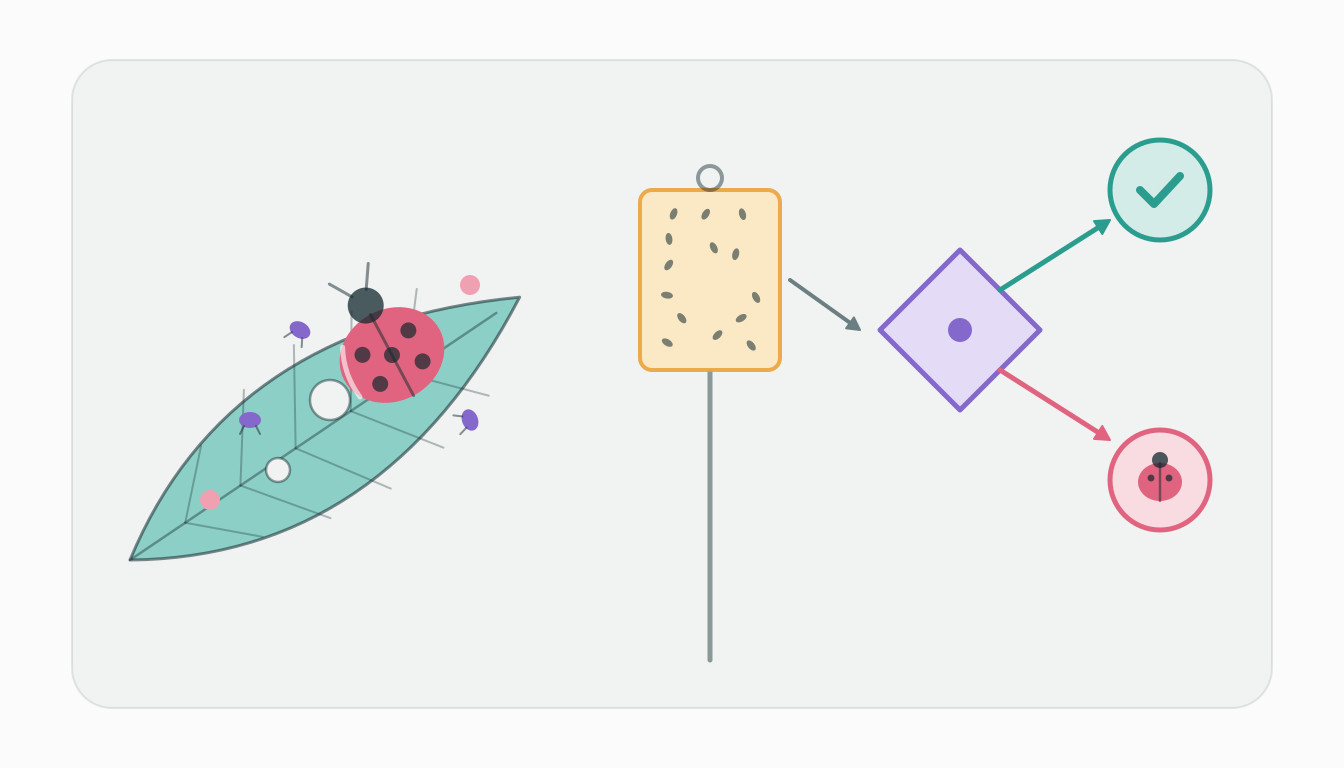
8 modules. Read each lesson, work the examples, then take the module quiz.
How the course works, what Integrated Pest Management is for, and how the calculations are used.
What makes an organism a pest, how pest density relates to damage and money, and how economic and action thresholds turn counts into decisions.
The main pest groups and their life cycles, how temperature drives development through degree-days, and how populations grow exponentially and then level off.
How to look for pests so that the counts mean something: methods and traps, the spatial pattern of pests and the sample size it demands, and faster presence-absence and sequential plans.
Methods that prevent pests or hold them down without a pesticide: sanitation, crop management and resistant cultivars, physical barriers and traps, natural enemies, and how to protect them.
What a mode of action is and why it matters, how selection turns rare resistance genes into resistant populations, how to slow that process, and how to measure efficacy and resistance.
Hazard, exposure and risk and how to reduce them, the arithmetic of dilution and calibration with hypothetical numbers, and how drift happens and what records must show.
Turning counts, thresholds and tools into decisions under uncertainty, judging whether a programme worked, and assembling a complete programme for a crop.
A summary of the course as one decision system and a comprehensive final quiz.
A diagram in every lesson
Worked examples: economic injury level, degree-days, population doubling, sample size, sequential stop lines, predator ratio, resistance allele frequency, Abbott's formula, dilution and calibration, drift and expected cost
Module quizzes of ten questions and a 25-question final assessment, with an explanation for every answer
Certificate of completion with a public verification page
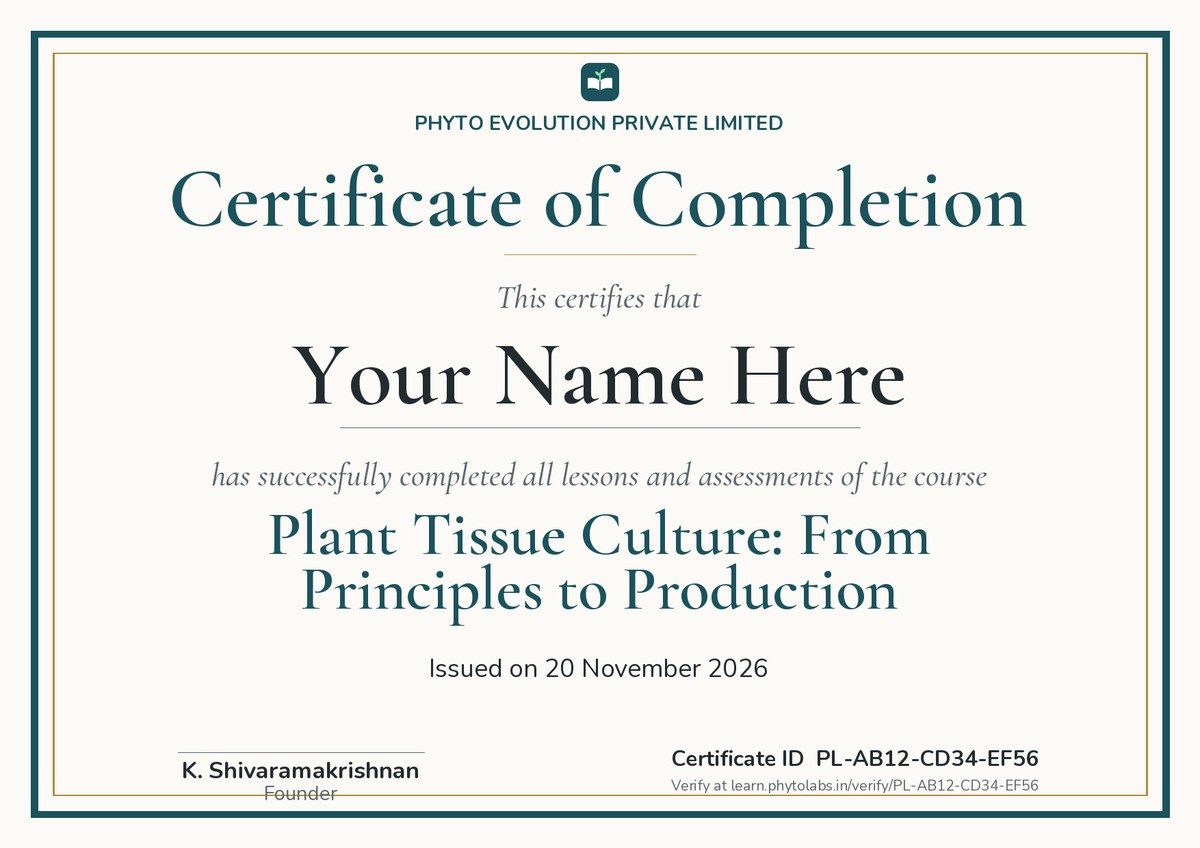
Complete every lesson and pass every quiz in Integrated Pest Management. Your certificate has a unique ID and a public verification page.
Start learning freeChemical control is part of two modules out of seven. The focus is biology, monitoring, thresholds and decisions. The course names no products and gives no application rates.
No. PDD-301 covers plant diseases and their diagnosis; this course covers pests and the management of whole programmes.
Arithmetic, a calculator and patience with formulas. Every calculation is set out step by step with real numbers.
No. Registration, rates and intervals differ between countries and change, so the current local label and regulation always decide. The spray arithmetic uses hypothetical numbers to teach the method.
Yes. Lessons, quizzes and the certificate are free; a free account opens them and saves progress.
Free, self-paced, with quizzes, calculators and a certificate.