Module 1
What Limits Post-harvest Life
Why a harvested fruit, leaf, stem or propagule keeps changing, what shelf life and quality end points mean, and how different plant organs differ in perishability.
Part of Protected Cultivation PathwayThe Complete Plant Science Library
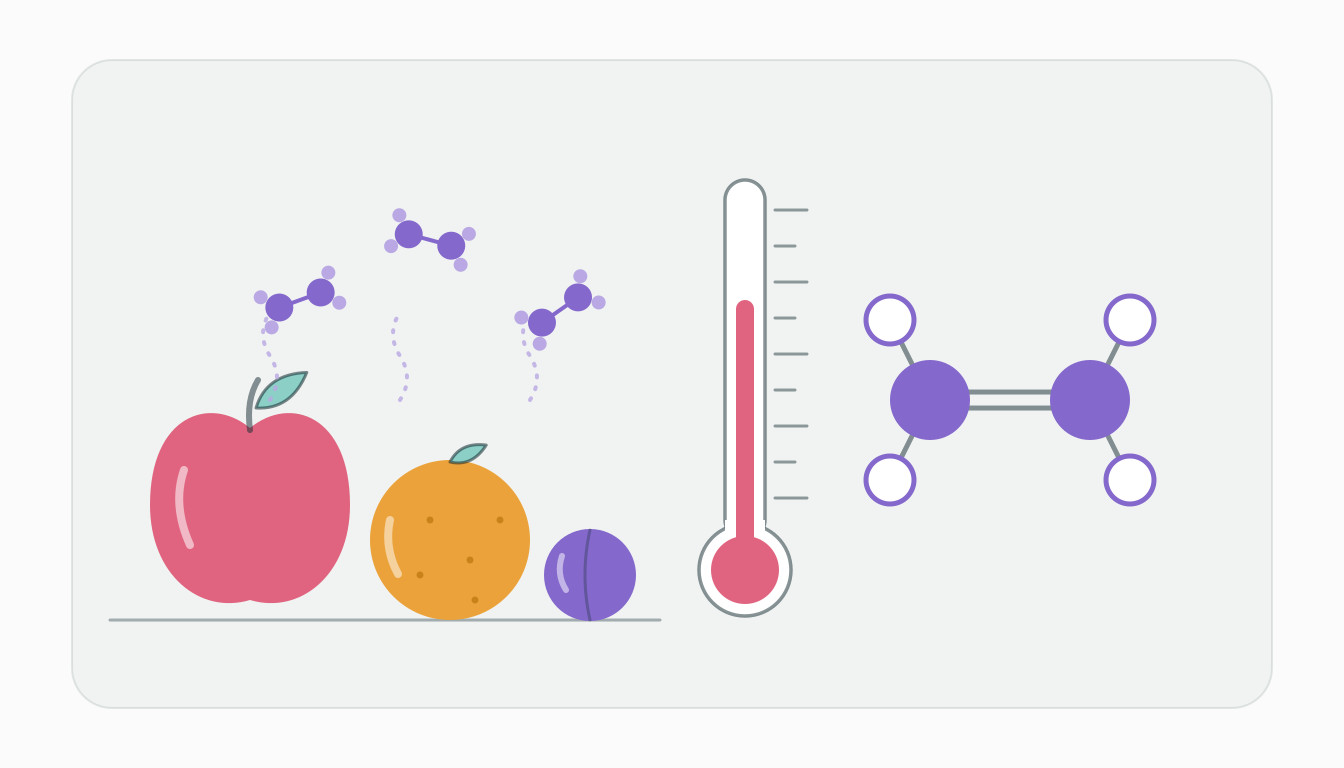
What happens to plant material after it is cut or picked: respiration and heat, water loss, ethylene action, senescence, chilling injury, controlled atmospheres and how storage conditions slow change, with examples from cut stems, fruit and propagules.
8 modules. Read each lesson, work the examples, then take the module quiz.
Why a harvested fruit, leaf, stem or propagule keeps changing, what shelf life and quality end points mean, and how different plant organs differ in perishability.
The chemistry of respiration, how to measure its rate, how it turns into heat that a store must remove, and how temperature controls it through Q10.
How produce loses water, how vapour pressure deficit (not relative humidity alone) drives it, how to calculate weight loss, and how cut stems keep or lose their water balance.
Ethylene as a gaseous plant hormone: its units and sources, how plants make and perceive it, the difference between climacteric and non-climacteric ripening, and the principles of managing exposure.
Senescence as an orderly programme of degradation, the hormones and reserves that steer it, and ripening and softening as a special, useful kind of change in fruit.
How fast produce cools and how cooling methods differ, what the lower limits of temperature are (chilling and freezing), and how time in the cold chain adds up.
How changing the gas around produce slows respiration and where it starts to do harm, how to judge the quality of a lot from a sample, and how to combine every earlier control into one storage plan.
A comprehensive final quiz across all seven modules.
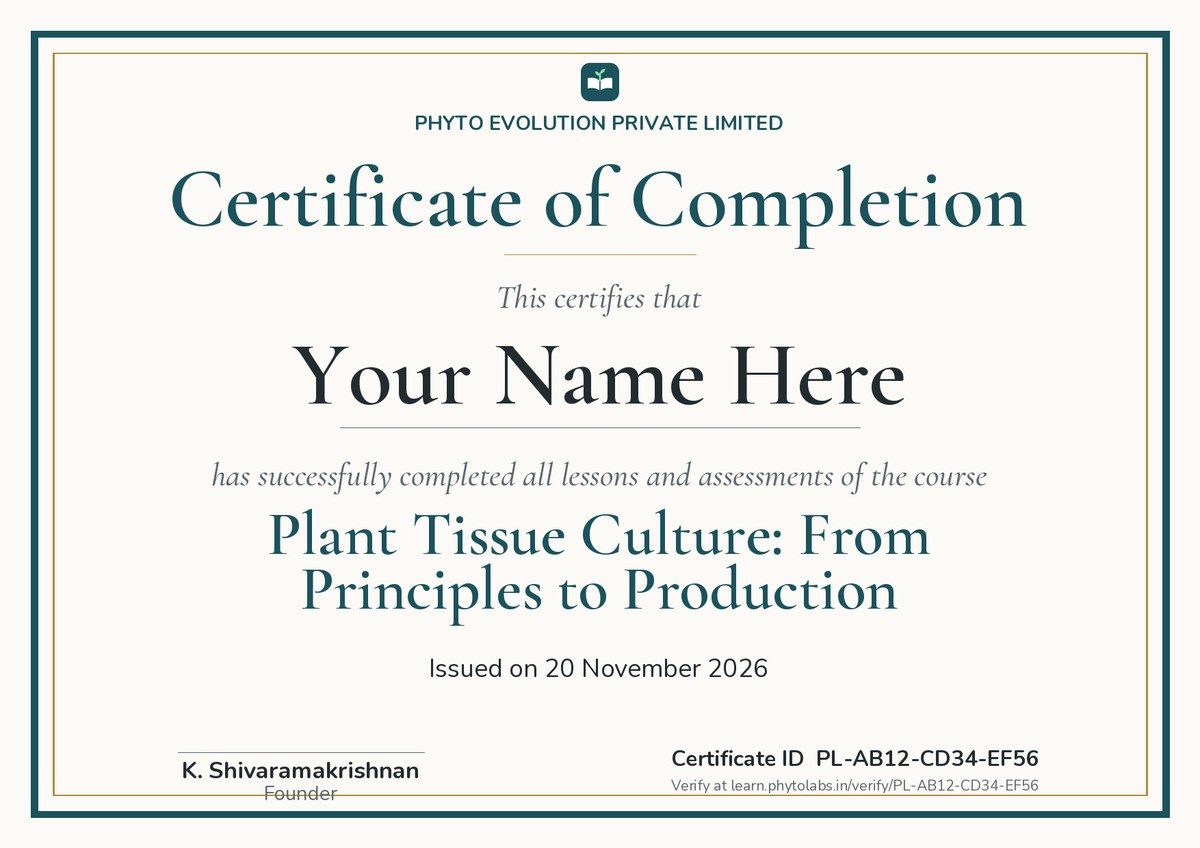
Complete every lesson and pass every quiz in Post-harvest Physiology and Ethylene. Your certificate has a unique ID and a public verification page.
Start learning freeNo. The same physiology applies to cut stems, leaves and propagules.
Helpful, not required.
Free, self-paced, with quizzes, calculators and a certificate.